How many kilowatts do I actually need? It is the single most common question we hear from homeowners who are ready to go solar, and it is the right one to ask. Get the size right and your system pays for itself comfortably. Go too small and you leave savings on the table. Go too big and you pay for panels you will never fully use. The good news is that choosing the right size is not a dark art. It comes down to three simple things, and this guide walks you through each one so you know what to look for before anyone climbs onto your roof.
Step one: start with your TNB bill
Your electricity bill is the best clue to how much solar you need, because it tells us how much power your home actually gets through in a month. As a very rough starting point, the table below shows the kind of system size that tends to suit different bill levels. Treat these as general ranges to set your expectations, not a final quote, because your roof and usage pattern still need to be checked in person.
| Monthly TNB bill | Typical system size |
|---|---|
| RM250 to RM350 | around 3.5 to 4.2 kWp |
| RM400 to RM600 | around 5.0 to 6.5 kWp |
| RM700 and above | around 7.0 to 10 kWp |
The pattern is straightforward. The higher your bill, the more electricity there is to offset, and the larger the system that makes sense. If you would like to see how these sizes translate into real home packages with panel counts, our companion guide on what size solar system you need lays that out in detail.
Step two: look at your roof space and sunlight
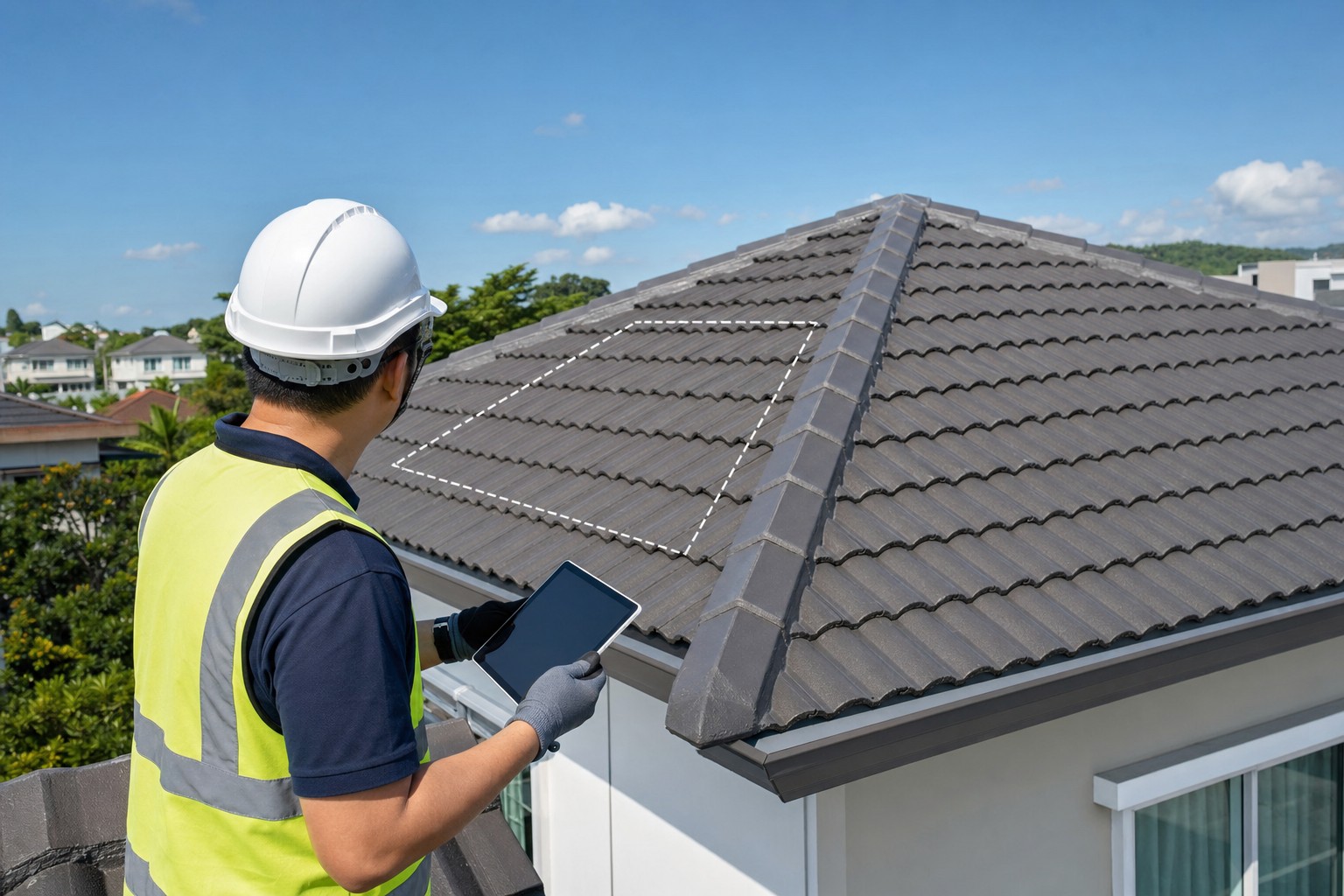
The second factor is your roof itself. Panels need somewhere clear to sit, so we look at how much unshaded roof area you have to work with. As a rough guide, a five to six kWp system needs somewhere in the region of 250 to 350 square feet of usable roof. Beyond the space, the orientation and tilt matter too, because a roof that catches strong light through the middle of the day will generate more than one that is shaded during those hours.
Most landed homes in Malaysia have good sun exposure, and even roofs with some shade can often be worked around with a smart layout. If shading is a concern for you, it is worth reading our article on whether solar works on a shaded roof before you assume your roof rules you out.
Step three: think about when you use power
This is the step people forget, and it makes a real difference. Solar generates during the day, so the more of your electricity you use in daylight hours, the more of your own free power you soak up directly. It helps to ask yourself a few honest questions. Is someone usually home during the day? Do you run air conditioning, a water heater or the washing machine while the sun is up? Are you planning to add an electric vehicle charger down the line?
The more of your usage that falls in daytime, the faster your system pays back, because you are consuming solar as it is produced rather than importing from the grid. And whatever surplus you do generate is not lost. Under Solar ATAP, exported energy earns you credit that offsets what you draw in the evening.
A quick word on the rebate
Sizing sensibly also keeps you well placed for the SuRIA Home rebate, which pays RM600 for every kWac installed, up to RM3,000. A neatly matched system can capture a good share of that rebate while still fitting your home's real needs, rather than being oversized just to chase the maximum.
The honest bottom line
The three steps above will give you a solid feel for the right ballpark, but the final size always comes down to a proper look at your specific home. That is why our approach is to design around your actual usage rather than pushing a standard package. If you send us your latest TNB bill and a photo of your roof, we can suggest a right-sized system for you with no guesswork and no pressure. It is the surest way to land on a size that saves you the most for the least outlay.