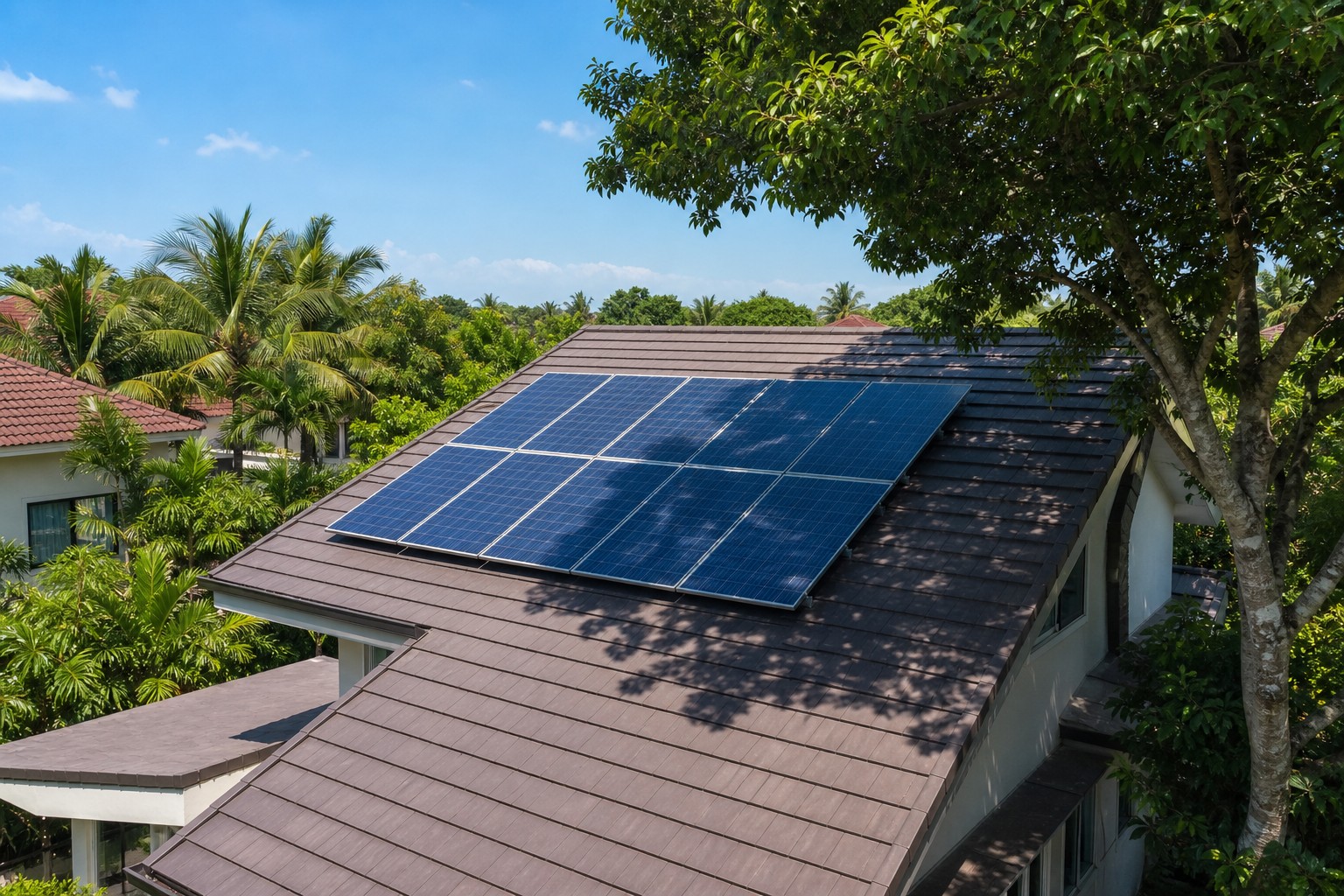
A shaded roof is one of the most common reasons homeowners talk themselves out of solar before they even ask. There is a tree at the side of the house, a neighbour's building casts a shadow in the morning, or a water tank sits in the wrong spot. It feels like a dealbreaker. In truth, a bit of shade is normal on Malaysian landed homes, and in many cases solar still works well. The question is not whether your roof is perfect. It is whether your roof is good enough, and that is easier to meet than most people think.
Does shade really kill performance?
Not the way people fear. A little morning or late afternoon shade from a tree, a water tank or a nearby building is very common, and it does not write off the whole system. What matters most is what happens during peak sun hours, roughly from mid-morning to mid-afternoon, when the sun is high and your panels do the bulk of their work. If your roof gets clear light through that window, a system can still generate a serious amount of electricity even if the edges of the day are partly shaded.
So the real test is timing, not perfection. A roof that is shaded at 8am but bathed in sunlight from 10am to 3pm is a perfectly workable solar roof. This is exactly the kind of thing a proper site assessment is designed to measure.
Technology has come a long way
Even where shade does fall on part of the roof during the day, modern equipment handles it far better than older systems ever could. There are a few tools installers use to limit the impact. Smart panel layout is the first and simplest, placing panels on the sections of roof that stay clear during peak hours and keeping them away from known shade zones. Beyond that, hardware such as power optimisers can reduce the effect of a shaded panel so that one shadow does not drag down the performance of its neighbours. The result is that partially shaded homes can still achieve strong output rather than being ruled out entirely.
Getting this layout right is part of designing a system properly, which ties directly into choosing the correct size for your home. Our guide on what size solar system you need explains how usable roof area and your usage shape the final design.
Who should still look into solar?
Plenty of homes with less than ideal roofs are still great candidates. Terrace and semi-detached houses with some tree cover often have enough clear roof to make a system worthwhile. Homes in and around Kuala Lumpur, Penang, Johor and Selangor with moderate daytime shading regularly go solar successfully. And if your monthly TNB bill is on the higher side, the savings can more than justify a system even if shade means you fit slightly fewer panels than a completely open roof would allow.
The point is that a shaded roof usually changes the design a little rather than ruling solar out. You might end up with a slightly smaller array placed more thoughtfully, and that can still deliver a healthy return.
The only way to know for sure
Guessing about shade from the ground is unreliable, because a shadow that looks significant to you might fall outside peak hours, or a spot you assumed was clear might catch a shadow you had not noticed. This is why a free on-site assessment matters. Our team looks at the direction your roof faces, its tilt, and how sunlight moves across it through the day, then tells you honestly what your roof can and cannot do. You can see how that fits into the wider journey in our overview of how the whole process works.
Do not rule yourself out
A shaded roof is a reason to get a proper assessment, not a reason to give up on solar. With smart layout, modern hardware and an honest evaluation, a great many partly shaded Malaysian homes still enjoy real savings on their TNB bill. If you have been assuming your roof will not qualify, let us take a look before you decide. The assessment costs nothing, and you will finally have a clear answer instead of a guess.