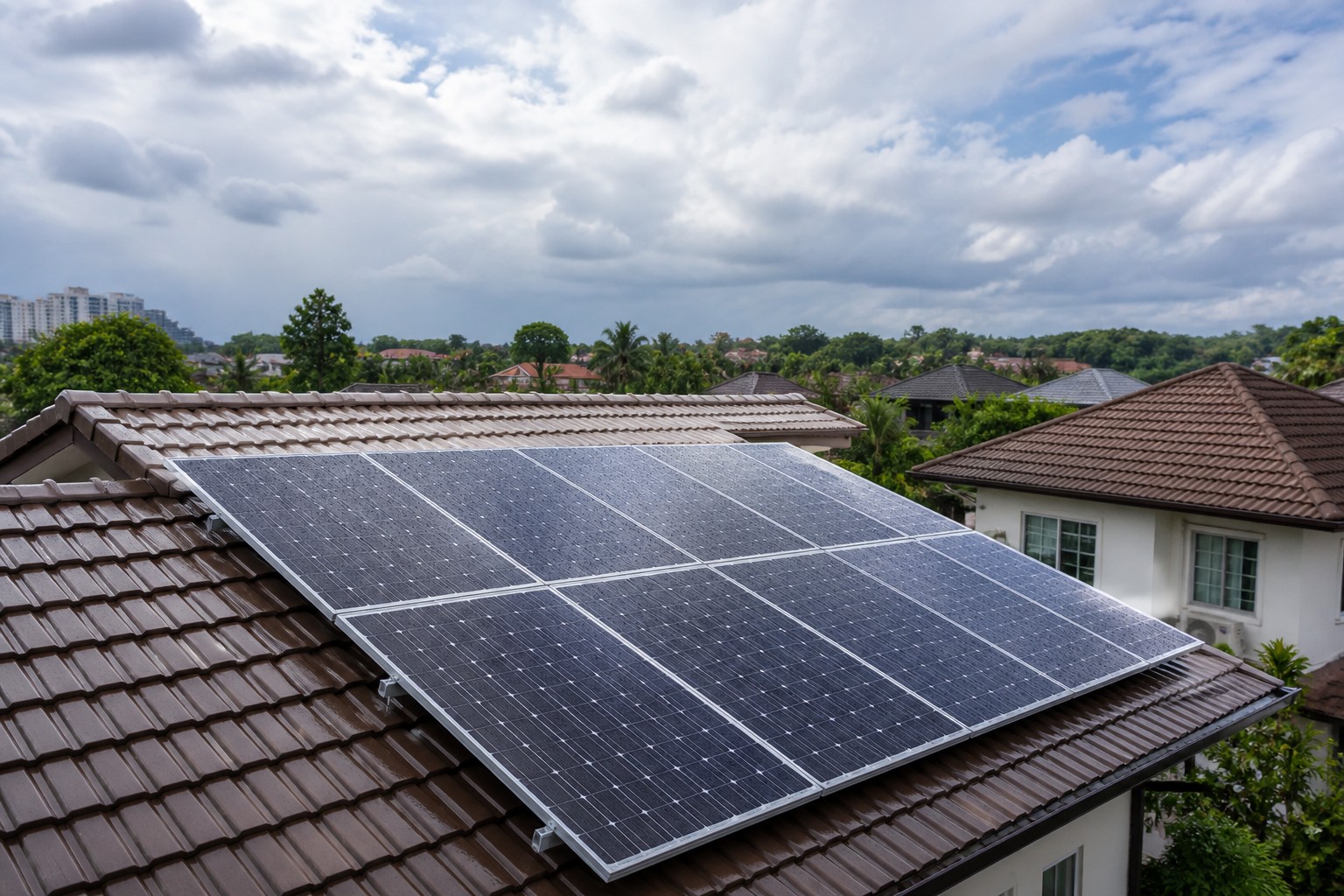
Anyone who has lived through a Malaysian monsoon knows the drill. Bright morning, heavy afternoon downpour, grey skies for hours. So it is a fair question to ask before you invest in a roof full of panels. If it is cloudy or pouring half the time, will solar actually do anything useful here? The short answer is yes, and the longer answer is that our climate is better suited to solar than most people assume. Let us clear up the myth and look at how a system really performs in tropical weather.
Panels do not need blazing sun to work
The common belief is that solar panels only produce power when the sun is out in full force. That is not how they work. Panels respond to daylight, not just direct sunshine, so even under a thick layer of cloud they keep generating. Output drops on an overcast day, of course, but it does not fall to zero. Depending on how heavy the cloud cover is and the time of day, panels can still produce a useful share of their normal output, often somewhere in the region of 10 to 30 percent during dull conditions.
Malaysia also has one big natural advantage that people forget. Because we sit near the equator, our daylight hours stay fairly consistent all year round. There is no long dark winter to plan around. Even through the rainy season you still get plenty of usable daylight, which is why solar remains a solid investment across the country rather than a fair-weather gamble.
Good design accounts for the weather
A big part of why cloudy days are not a problem comes down to how the system is planned in the first place. A proper installer does not size your system for a perfect sunny sky every day. They design it around real local conditions and your actual usage, so the system is built to deliver steady performance across the year, wet season included. Getting this right is the whole point of sizing carefully, which we cover in our guide on what size solar system you need.
There is also a clever balancing effect built into the way solar billing works. On a bright day your panels usually make more than your home needs, and under Solar ATAP that surplus is exported to the grid for credit. On a duller day when you produce less, those credits help make up the difference. So rather than looking at any single grey afternoon, it makes more sense to think about your generation averaged across the whole month, which smooths out the ups and downs of the weather.
Want to lean on cloudy days even less?
If your area sees long stretches of heavy rain and you want more consistency, pairing your panels with storage is worth a look. A battery lets you keep some of the electricity you generate on the good days and draw on it later, which softens the impact of a run of dull weather. You can read how that works in our overview of battery storage. It is not essential for everyone, but it is a nice option for homes that want to squeeze the most out of every sunny hour.
Who really has nothing to worry about?
Honestly, most Malaysian homes. Families who use a fair amount of electricity during daylight hours, when the panels are generating, tend to see the strongest results because they are using power at the exact time it is being made. Homes in wetter areas like Penang, the Klang Valley or Pahang still generate well across the year thanks to our consistent daylight. And any household simply looking to bring down a high monthly TNB bill will feel the benefit, even if the system is not covering every single unit on every single day.
The bottom line
Cloudy skies and rainy seasons are a normal part of life in Malaysia, and solar is designed with exactly that in mind. Your panels keep working through the grey, smart billing evens out the good and bad days, and a well sized system is built for year-round performance rather than a handful of perfect afternoons. The best way to know how your specific roof and location would perform is to have us take a proper look. We serve homes across Malaysia, rain or shine, and the assessment is free.