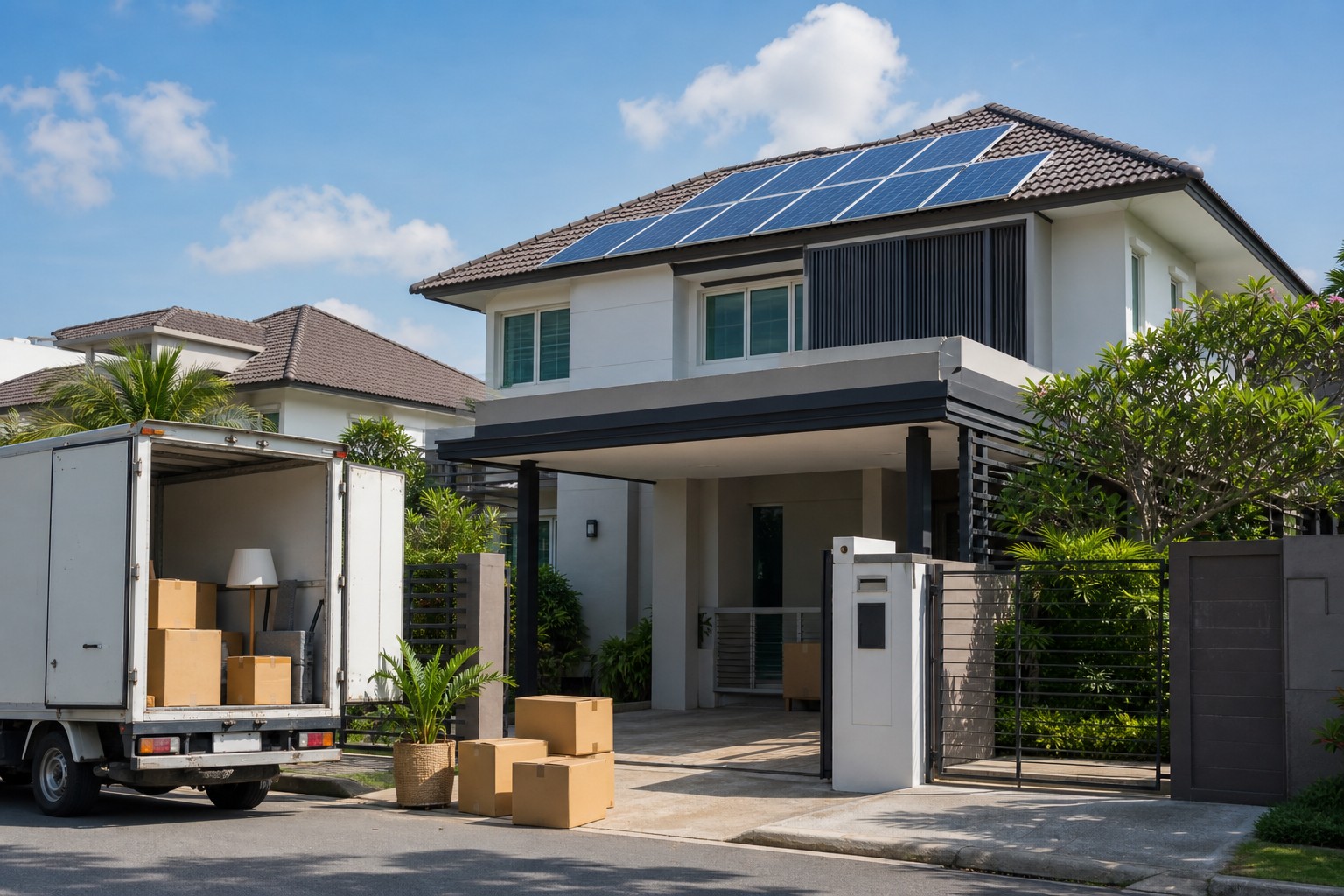
It is one of the most common reasons people hesitate before going solar. You like the idea of cutting your TNB bill, but you are not sure you will stay in the same house for the next ten or fifteen years. Maybe there is a bigger home on the horizon, a move back to your hometown, or a job that could take you elsewhere. So the worry is understandable. If you might move in a few years, does it still make sense to install solar now? In almost every case the answer is yes, and you have more flexibility than you might think.
You are not locked in for decades
People often assume solar only pays off if you stay put for the full life of the system. That is not how the numbers actually work. A well sized rooftop system starts trimming your bill from the very first month it is switched on, and those savings add up quickly. Even if you only live in the house for four or five years, the electricity you avoid buying over that time can run into the thousands of ringgit. On top of that, when it comes time to sell, the system does not simply vanish from the equation. You have two clear paths, and both leave you better off than if you had never installed at all.
Option one: sell the house with the system
The simplest route is to leave the solar system where it is and let it become part of the property. In Malaysia, homes with solar already fitted are increasingly seen as a step above the rest, especially in busy markets like Kuala Lumpur, Penang and Johor Bahru where buyers are very aware of rising electricity costs. A house that comes with a working system and a much lower TNB bill is an easy story to tell a buyer.
Because of that, solar can genuinely help your listing. Buyers like the idea of moving in and immediately paying less for power, and a solar-equipped home can stand out and sell faster than an identical house without it. Industry watchers generally agree that solar adds to a property's appeal and its value, so you can reasonably build the system into your asking price rather than treating it as money left behind. We cover this in more detail in our article on whether solar panels increase your house value.
Option two: take the system with you
If you feel attached to your panels, or you are moving into another landed home where you will use them just as much, you can bring the system along. Most rooftop installations can be carefully dismantled and reinstalled at a new address. There are a few practical things to plan for. You will need to reapply for the solar programme at your new home, since the approval and metering are tied to a specific TNB account and address. You can read how that scheme works in our guide to Solar ATAP. There are also some costs to budget for, mainly the labour to remove and refit the panels, new wiring where needed, and a fresh inspection and commissioning at the new property.
Moving a system is not free, but for many homeowners it is worth it, particularly if the panels are relatively new and still have most of their productive life ahead of them. It is a common choice for families upgrading to a bigger landed property or relocating back to their home state.
Which option is right for you?
There is no single correct answer, because it depends on your timeline and your new home. As a rough guide, selling with the system tends to make sense when the buyer will value a lower bill and you would rather keep your move simple. Taking the system with you tends to make sense when you are moving to another suitable roof and the panels are still young. Either way, the key point is the one people miss. Choosing to move house later is not a reason to keep renting expensive electricity from the grid today.
The bottom line
Solar is a flexible asset, not a ball and chain. Whether you eventually sell up or pack the panels into the lorry, the years of lower bills in between are yours to keep, and the wider benefits of going solar do not disappear just because your address changes. If you are weighing up a move, the smartest thing you can do is get the actual figures for your home so you can see the break-even point clearly. We are happy to run those numbers with you and explain, in plain terms, whether keeping it, moving it, or reselling it makes the most sense for your situation.