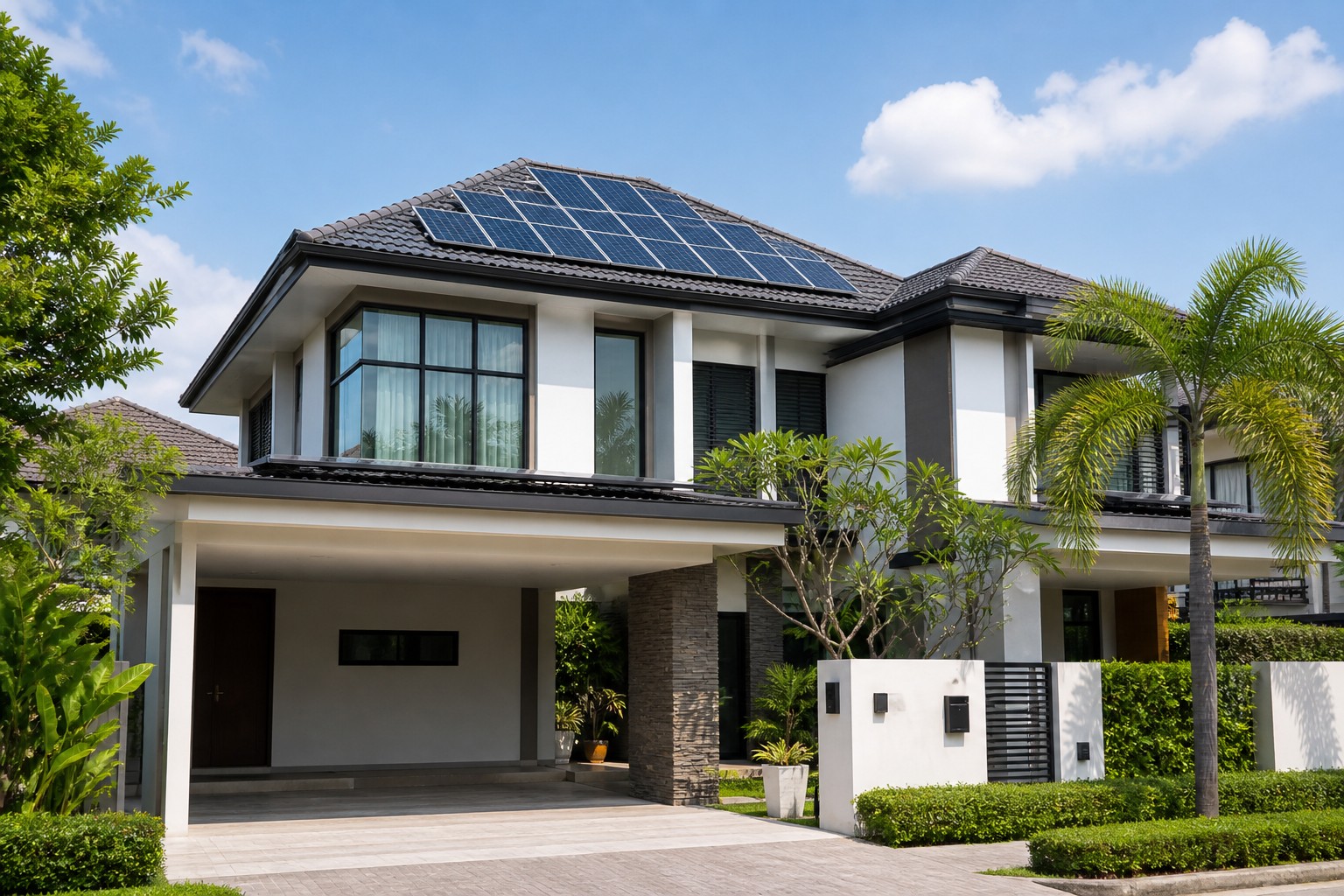
When you spend money improving your home, it is fair to ask whether you will see any of it back when you sell. With solar, a lot of homeowners assume the panels are just a personal saving on the bill and nothing more. The reality in Malaysia is more interesting than that. A solar system does not only cut your electricity cost while you live there, it also tends to make the house easier to sell and more appealing to buyers. Here is how that plays out in practice.
A house that comes with a lower bill sells itself
Think about what a buyer sees when they view two similar houses on the same street. One has a normal TNB bill. The other comes with a working solar system and years of proof that the monthly electricity cost is a fraction of what it used to be. For most families, that is an easy comparison. The idea of moving in and immediately paying far less for power, sometimes close to nothing in the daytime, is a genuine draw.
That appeal is only growing as electricity tariffs rise. A solar home offers a buyer some protection from future increases, because a good chunk of the household's energy is already covered by the roof. In busy markets like Kuala Lumpur, Penang and Johor Bahru, where buyers are especially cost-aware, this can be the detail that makes your listing stand out from the rest.
It is not just about money, it is about appeal
Modern buyers, particularly younger families in urban areas, are drawn to homes that feel efficient and future-ready. Solar ticks several of those boxes at once. It signals a home that is kinder to the environment, it comes with smart features like app-based monitoring, and quality panels carry long performance warranties that can run to 25 or 30 years. All of that adds up to a property that feels like a smart, modern place to live rather than one you will need to upgrade later.
Because of that broader appeal, homes with solar can attract more interest and, in many cases, sell faster than an equivalent home without it. A faster sale at a confident price is worth a lot on its own, quite apart from any headline valuation.
What property agents tend to see
Agents around the country report that solar-equipped homes often pull in more serious buyers, especially when the seller can back up the story with real numbers. The most persuasive things you can show are simple. Keep your old TNB bills from before the installation next to the much smaller ones after it, so a buyer can see the difference at a glance. Have a clear note of the system size and the estimated payback. And keep the warranty documents and a recent system health report handy so the buyer knows exactly what they are inheriting.
None of that requires anything fancy. It is just good record keeping, and it turns a vague promise of savings into hard evidence a buyer can trust.
A sensible word on numbers
It would be easy to throw out a precise figure for how much value solar adds, but the honest answer is that it varies with the property, the location, the size of the system and the state of the market. What we can say with confidence is that a well installed, well documented system is treated as an asset rather than a quirk, and that it supports both a stronger asking price and a quicker sale. If you would like a grounded view for your particular home, that is exactly the kind of thing we can talk through.
The takeaway
Solar is one of the few home upgrades that pays you twice. It lowers your bills for as long as you live there, and it leaves you with a more marketable, more valuable home when you decide to move on. If you are staying put, you enjoy the savings and the wider benefits of going solar. If you sell, the system becomes a selling point. And if you would rather take it with you, our guide on moving house after installing solar walks through that option too. Either way, the roof is working in your favour. The best starting point is a free assessment so you can see the numbers for your own home.