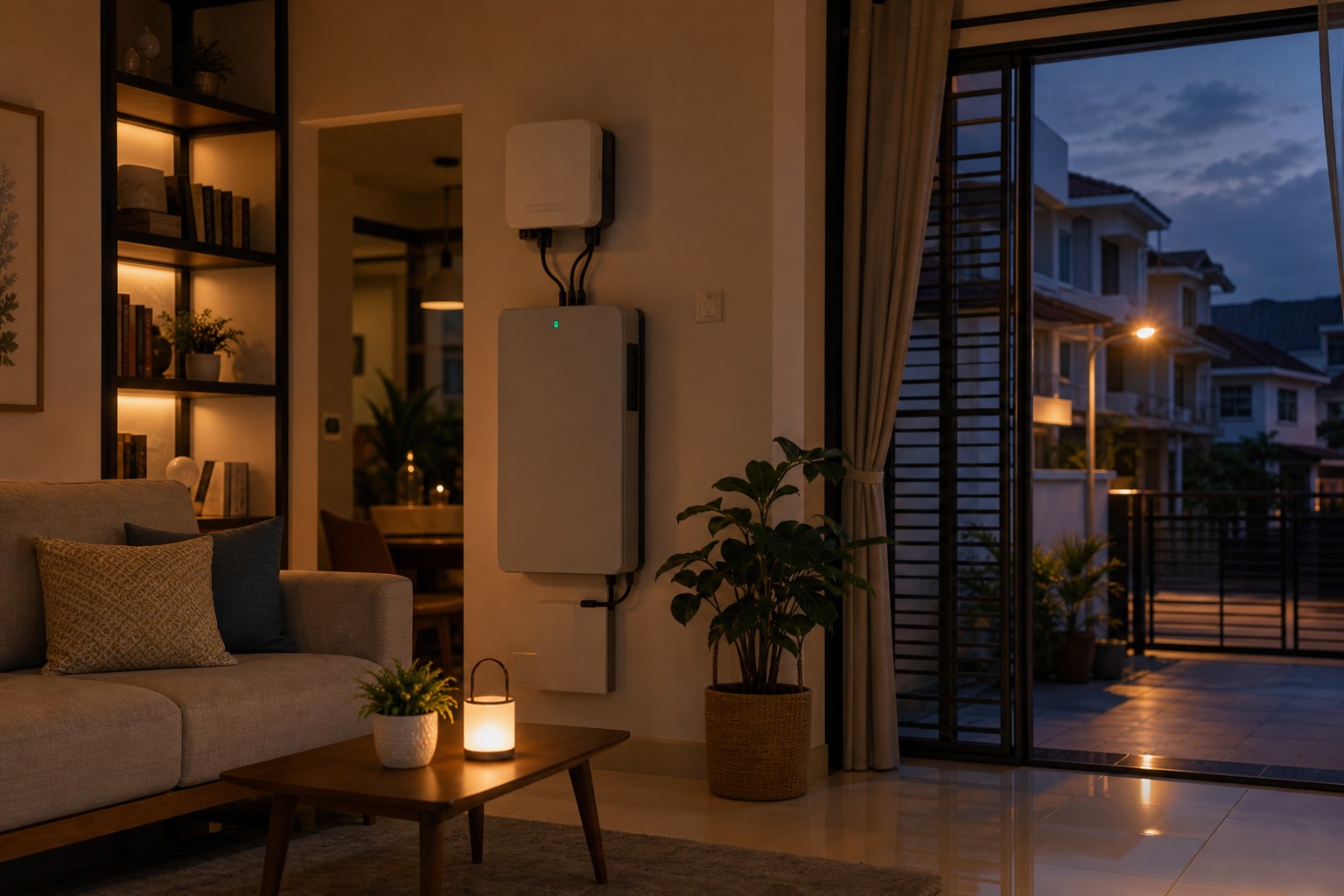
It sounds obvious. You have a roof full of panels quietly making electricity, so surely when TNB goes down, your home carries on as normal? This is one of the biggest misunderstandings about solar in Malaysia, and it catches a lot of people by surprise. The truth is that a standard rooftop system switches off during a blackout, and it does so on purpose. Whether your lights stay on depends entirely on one thing, which is whether you have a battery. Let us walk through exactly what happens and why.
Why a normal solar system shuts down in a blackout
The great majority of home solar systems in Malaysia are what we call on-grid or grid-tied. Your panels are connected to the TNB network. During the day they power your home and send any surplus back to the grid for credit under Solar ATAP. That connection is what makes the everyday savings possible, but it also comes with an important rule.
When the grid loses power, a grid-tied inverter is designed to shut itself down automatically. This is a safety feature, not a fault. If your panels kept pushing electricity out while the grid was down, they could send power back into the lines that TNB technicians are working on to restore supply. That would put those workers in danger. So the inverter detects the outage and stops, and it stays off until the grid comes back. It is the correct, legally required behaviour, and every properly installed on-grid system in the country does the same thing.
The catch: no battery means no backup
Here is the part that surprises people. Because a standard system shuts down for safety, having solar on your roof does not, by itself, keep your fridge running during a blackout. On a bright afternoon with the sun blazing, if TNB fails, an on-grid home goes dark just like a neighbour with no solar at all. The panels are fine and will restart automatically once supply returns, but during the outage itself they are idle.
For many homes this is perfectly acceptable. Blackouts in most parts of Peninsular Malaysia are short and infrequent, so an on-grid system that maximises your daily savings is often the sensible, lower cost choice.
How to stay powered: batteries and hybrid systems
If you do want your home to keep running through an outage, the answer is to add energy storage. A battery changes the whole picture. Instead of every surplus unit going to the grid, some of it is stored at home, ready to be used the moment the grid drops. The setup that makes this possible is a hybrid system, which intelligently blends three sources of power, your solar panels, the TNB grid, and a battery.
Our AI BESS 360 battery storage is built exactly for this. It uses a safe LFP battery and a hybrid inverter, and when the grid fails it can switch over automatically so your essential circuits stay live. In practice most people do not try to run the entire house on a battery during an outage. Instead the system feeds a critical load panel that keeps the things that matter going, typically your fridge, some lights, fans, the Wi-Fi router and phone chargers. That is usually more than enough to ride out a blackout in comfort.
Is a battery worth it for your home?
This really comes down to where you live and how much peace of mind is worth to you. If your area rarely loses power, a straightforward on-grid system will give you the best return, and you may decide backup is not necessary. If you are in a spot with frequent or lengthy outages, or you have equipment you simply cannot afford to lose power to, such as medical devices or a home office, then a hybrid setup with storage starts to look very attractive. A battery does add to the upfront cost, so it is worth weighing honestly rather than adding it by default.
The good thing is you do not have to decide blind. During a free site visit we can look at your outage history, the appliances you would want to keep running, and your budget, then show you the real difference between a standard system and a battery-ready one. If a blackout has ever left you fumbling for candles, it is a conversation worth having before the next one.